


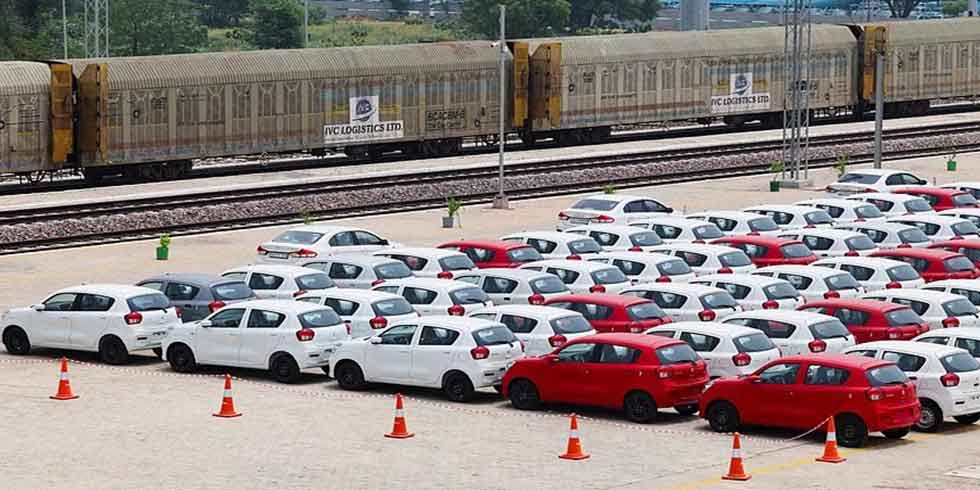
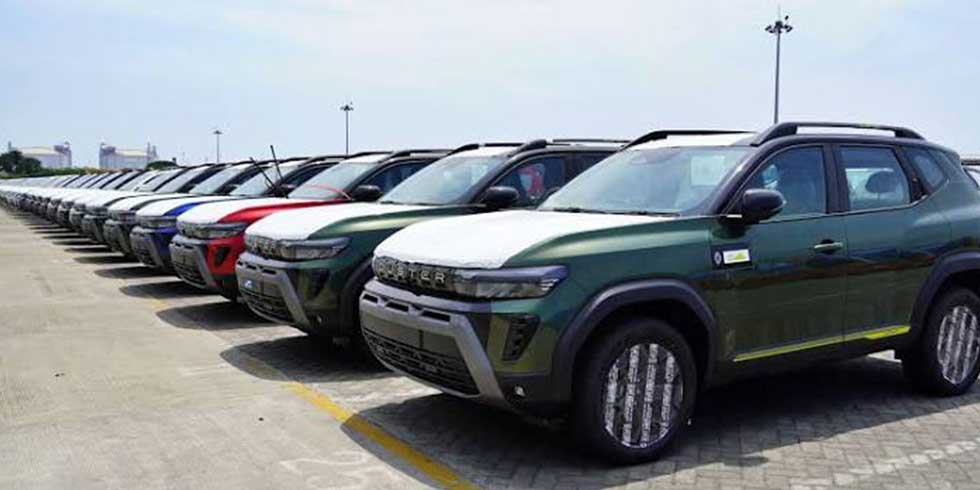
According to figures from the Society of Indian Automobile Manufacturers (SIAM), passenger vehicle exports from India increased 18% year over year (YoY) between April and September of the current fiscal year.
Strong worldwide demand, particularly from markets in the Middle East and Latin America, propelled the expansion.
Total passenger car exports increased to 4,45,884 units during the first half of FY2026 from 3,76,679 units during the same time the previous year.
Passenger car exports rose 12 percent to 2,29,281 units, while utility vehicle shipments rose 26 percent to 2,11,373 units. Van exports increased by 36.5 percent to 5,230 units as well.
With 2,05,763 units shipped between April and September—a 40 percent increase from 1,47,063 units during the same period last year—Maruti Suzuki India continued to be the leading exporter.
After that, Hyundai Motor India exported 99,540 units, an increase of seventeen percent from 84,900 units the previous year.
37,605 units were exported by Nissan Motor India, up from 33,059 units the year before. Volkswagen India (28,011 units), Toyota Kirloskar Motor (18,880 units), Kia India (13,666 units), and Honda Cars India (13,243 units) were among the other significant exporters.
According to SIAM, the expansion is a result of both a diversification of export markets and consistent demand from international markets.
Even though shipments to the US decreased in September as a result of higher tariffs, Indian automakers recorded positive growth in 24 countries between April and September.
According to the research, "Indian exporters have registered a positive growth in 24 countries during the first half of the current fiscal year, reflecting a clear trend of market diversification, even as shipments to the US declined due to high tariffs in September."
South Korea, the United Arab Emirates, Germany, Togo, Egypt, Vietnam, Iraq, Mexico, Russia, Kenya, Nigeria, Canada, Poland, Sri Lanka, Oman, Thailand, Bangladesh, Brazil, Belgium, Italy, and Tanzania are among the nations exhibiting a high demand for Indian automobiles.
Add Comment