


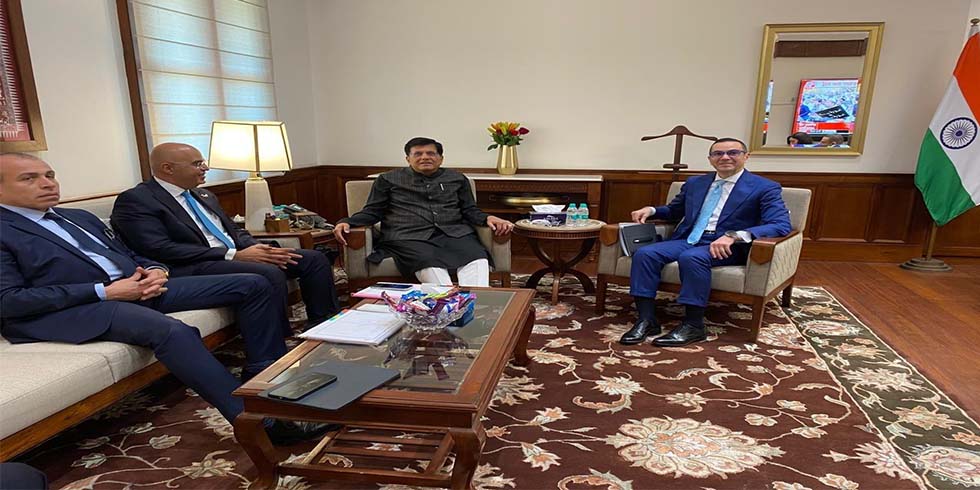
Egypt is looking to bring more Indian manufacturers into the country as part of efforts to expand domestic industrial production. The government also aims to position Egypt as a strategic manufacturing and export hub, giving Indian companies access to markets across Africa and the Arab region, according to Industry Minister Khaled Hashem on August 8, 2026.
Hashem pointed to the longstanding political relationship between Egypt and India as a strong platform for closer economic and industrial engagement. However, he noted that bilateral investment and industrial collaboration have yet to reach the level that could be supported by the two countries’ market opportunities.
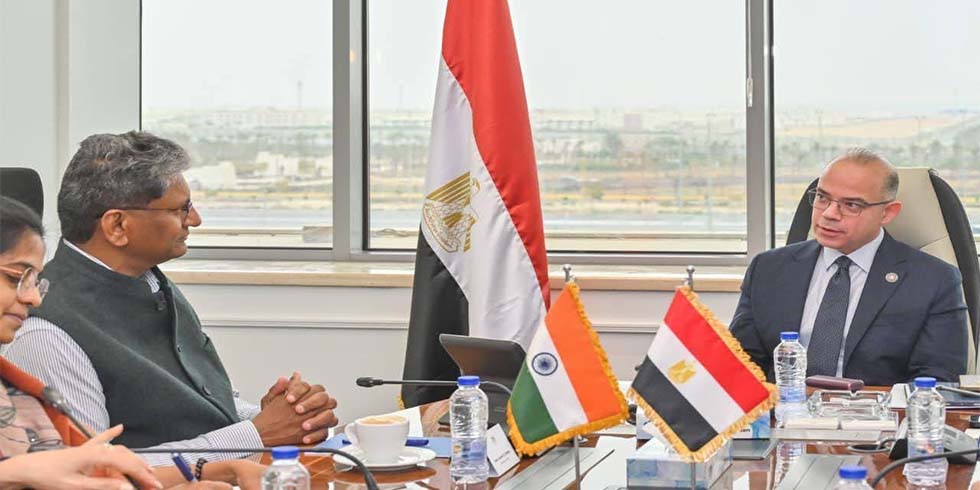
The meeting brought together Investment and Foreign Trade Minister Mohamed Farid, senior representatives from leading Indian companies and business organizations associated with the Federation of Indian Chambers of Commerce and Industry (FICCI), along with Egyptian business leaders representing the leather, packaging, food and chemical sectors.
The meeting took place following Hashem’s participation in the BRICS Industry Ministers’ Meeting held in Jaipur.
Hashem said Egypt wants to broaden its economic engagement with India beyond bilateral trade by attracting Indian manufacturers to establish production in the country. He highlighted technology transfer, greater use of locally sourced components and the development of domestic supplier networks as key priorities.
He further said that Egypt plans to strengthen its role as a manufacturing and export base, using its strategic position to reach markets across Africa and the Middle East, along with other countries covered by its existing trade agreements.
Hashem said the private sector would play the leading role in driving this shift, while the government would concentrate on improving the investment climate, addressing challenges faced by businesses and facilitating partnerships between Indian investors and Egyptian companies.
He added that the government would support investors by providing details on available industrial locations and essential infrastructure and services, helping businesses move more efficiently from project planning to execution.
The discussions included Indian businesses already active in Egypt or considering new investments across a range of industries, including chemicals, energy, power transmission, food processing, grain storage, consumer products and infrastructure. Among the companies represented were TCI Sanmar, SVC Industries, Ocior, Sterlite, ITC and Reliance Industries.
Hashem said the discussions highlighted significant potential for deeper Egypt-India industrial cooperation. He pointed to the performance of existing Indian investments in Egypt as evidence of this potential, particularly TCI Sanmar’s operations in the chemical sector.
Hashem pointed to TCI Sanmar as an example of how Indian companies can establish significant industrial operations in Egypt while meeting domestic demand and creating opportunities to expand exports.
The discussions also focused on potential investments in areas considered important to Egypt’s economic priorities, such as food production, grain storage, consumer products, infrastructure and services supporting industrial activities.
The discussions also considered ways to advance Ocior’s green hydrogen and ammonia initiative, alongside potential collaboration with Sterlite to apply Indian capabilities in power transmission systems and related energy infrastructure.

Add Comment