


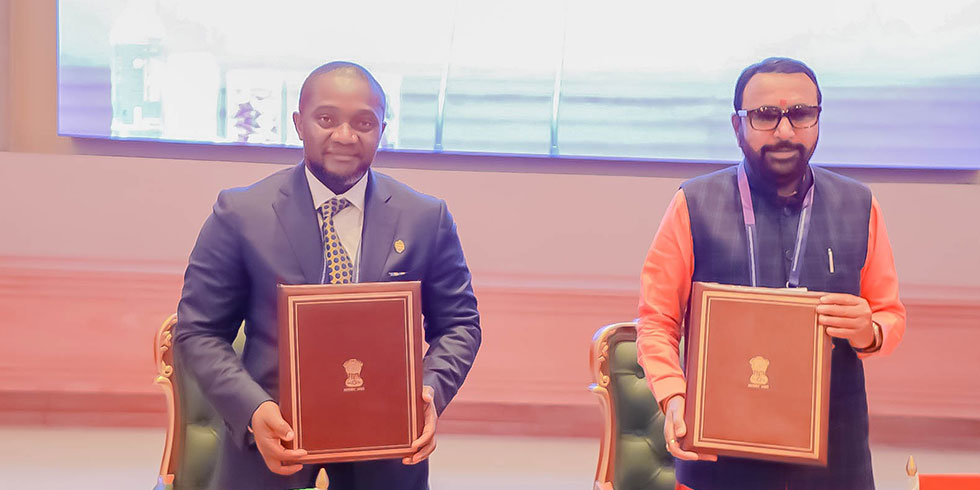
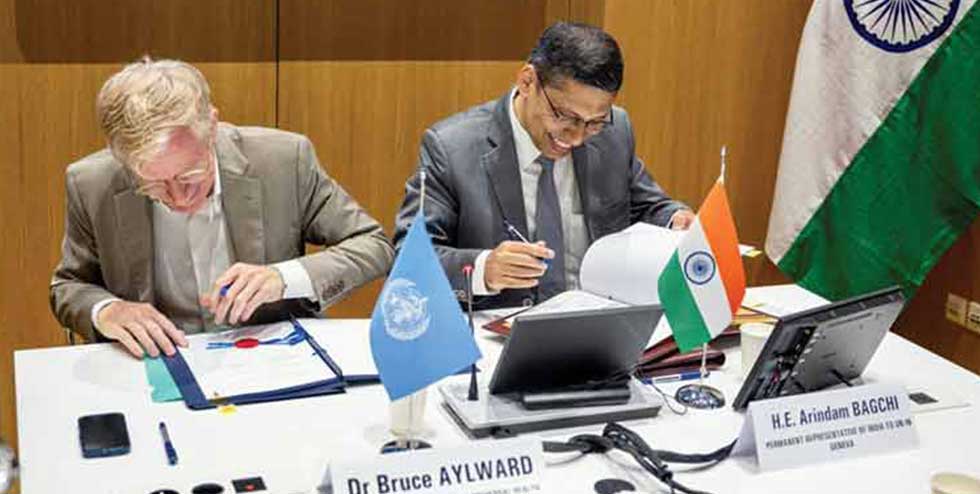
The World Health Organization (WHO) has applauded the signing of a memorandum of understanding (MoU) by the governments of Tanzania and India to develop, promote, and safeguard traditional medicine within legal and digital frameworks.
Tanzania has also extended an invitation to foreign companies to invest in the pharmaceutical industry, promising them a favorable business climate.
Following the signing, which was witnessed by WHO Director-General Dr. Tedros Ghebreyesus, Tanzanian Minister of Health Mohammed Mchengerwa stated in India that the pact will give traditional medicine legal protection.
"We believe that traditional medicine, when legally safeguarded, strengthened by science, enabled by technology, and managed with a commercial outlook, can be a keypillar in building healthier societies globally," he stated.
The minister pointed out that almost 60% of Tanzanians use traditional healers either in addition to or before receiving contemporary hospital care, demonstrating the continued importance of traditional medicine in the country's primary healthcare system.
"This reality shows that scientific evidence is not optional but essential," he emphasised.
Regarding safety and quality, Mr. Mchengerwa stated that he fully supports the WHO's 2025–2034 Global Strategy on Traditional Medicine, especially with regard to the development of safety, efficacy, and quality evidence.
Community-based, economical research conducted in partnership with government labs, universities, and research institutes will be given priority.
He emphasized how Tanzania's Traditional and Alternative Medicine Act No. provides a solid legal basis for traditional medicine.
"The aim is to professionalise traditional medicine while aligning it with international standards of quality and safety," he said, stating that integration into official healthcare systems is the next stage.
"Tanzania is committed to incorporating traditional medicine into primary healthcare to support universal health coverage. Services are already being provided in official hospitals, with 27 verified traditional medicine products used to treat both communicable and non-communicable diseases," he stated.
According to Mr. Mchengerwa, traditional medicine also stimulates economic expansion and innovation. Over 90% of Tanzania's 141 recognized traditional medicine items are made by regional small-scale business owners in accordance with the Health Sector Strategic Plan.
In order to improve medicinal plant production, processing, manufacture, quality, market access, and exports, he pointed out that Tanzania is encouraging public-private partnerships.
Indian Prime Minister Narendra Modi emphasized during the concluding session the value of preserving traditional knowledge and intellectual property while utilizing digital technology and artificial intelligence to protect, validate, and maintain traditional medicine.
He emphasized that technology should enhance and safeguard traditional healers' skills rather than replace them.

Add Comment