


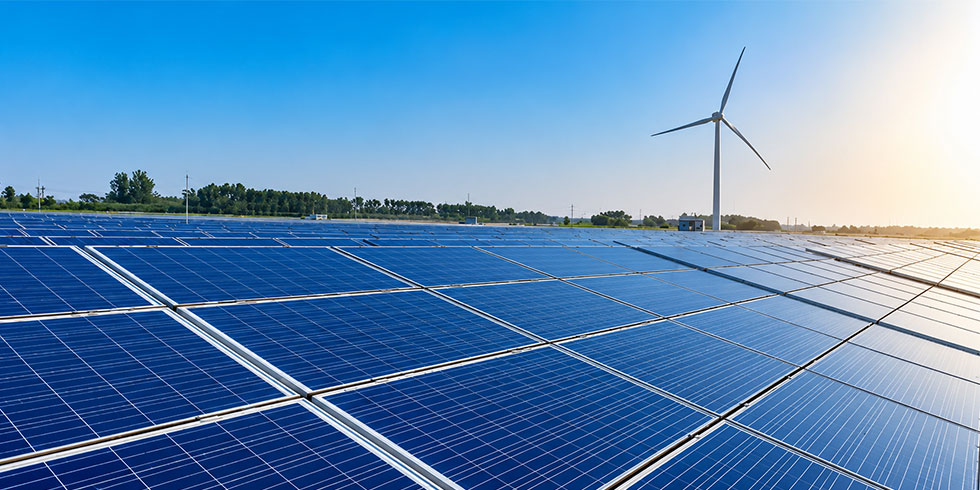
Thinking about grid reliability, power quality, and growing electricity costs, Kenya Power has urged deliberate moderation in the addition of variable renewable energy (VRE) sources including solar and wind. In a news statement on August 11, 2026, the utility stated that careful control of the increasing percentage of variable generation is necessary to guaranty a dependable and reasonably priced supply of power. Currently, 34% of Kenya's energy mix—roughly 1,900 MW during peak daytime demand—comes from solar and wind power. When demand drops to about 1,200 MW, their contribution increases to 36%.
Dr. (Eng.) Joseph Siror, Managing Director and CEO of Kenya Power, stated that the high percentage of VRE could lead to difficulties when solar or wind output abruptly shifts. In order to control variations in grid frequency and voltage, the utility must dispatch more power, which raises system operating expenses. Global benchmarks advise limiting VRE to about 15% of a grid's firm capacity, according to Siror. However, under the current "take or pay" power purchase agreements, Kenya's VRE integration exceeds 20%. According to him, the extra generation needed to keep the grid stable eventually raises consumer prices.
Kenya Power also mentioned battery energy storage as a potential remedy, while it pointed out that charging batteries during periods of low renewable power can be difficult. The company emphasized that costs for maintaining grid dependability must be included in the total cost of renewable electricity, in addition to generating costs.
The Eastern Africa Power Pool's largest VRE contribution comes from Kenya. VRE makes up 5.3% in Ethiopia, 4% in Uganda, 1.2% in Tanzania, and 10.4% in Egypt.
Kenya Power is encouraging more investment in firm generation sources, such as solar, geothermal, hydropower, thermal production, and electricity imports, in order to improve system resilience. Currently, roughly 80% of Kenya's energy comes from these sources.




Add Comment